Category: Health

Overcoming Boredom When You are In Home-Isolation

The author, Leo Tolstoy, once said, “Boredom is the desire for desires.” Never has that quote held truer than now when so many countries are going into lockdown and governments are telling people to self-isolate to curb the spread of COVID-19.

There’s no denying that self-isolation is the best way to prevent yourself from getting infected and it puts a brake on the spread of the disease. If everyone self-isolated for a month, the spread of COVID-19 would come to an abrupt halt.

Of course, this scenario is impossible to achieve, but it highlights just how powerful self-isolation is. The downside to this is that now you’re stuck at home and you’re bored.

You feel like the pandemic has cramped your cool lifestyle. Introverts may find no change to their already quiet lives but even they may feel a little rebellious since they’re being told to stay inside. It’s human nature.

There are several things you can do at home.

  • Start on projects that take a while to complete

Go ahead and get a puzzle book, sudoku, word search or colouring book. Now you and your family have something to spend hours figuring out. There’s even a jigsaw puzzle that has 18,000 pieces. Imagine that! (https://amzn.to/39jYVLc)

Alternatively, you may decide to start writing the book that you’ve always dreamed of writing.

Or maybe you’ve wanted to learn oil painting. Or start improving your guitar playing skills. There’s so much you can do and now is as good a time as any to start.

  • Exercise

This activity is crucial. Remember how you used to say, “But I just don’t have the time to go to the gym.”

Well, guess what? You have all the time in the world now to work out at home. Most gyms are closed these days. So, start training.

  • Spend time with your family

So often we are caught between juggling our careers and families. With more time at home now, you can actually catch up with your spouse and kids.

Engage in fun activities like board games or video games. A family that plays together stays together.

  • Plan your next Holiday

Yes, you may not be able to go anywhere now… but things will get better. The good news is that you can experience the same excitement by planning your future trip now.

Where will you go? What will you do/see? Where will you stay?

So many questions… and your family and you can spend time together finding the answers. Once you know how it’s all going to go, it’s just a matter of waiting until the COVID-19 situation has run its course and subsided for you to set off on your dream holiday.

  • Social media

Social media is a double-edged sword. While it can help you pass the time, it’s also filled with drama and debate which can put a dampener on your spirits.

Use social media for entertainment and AVOID getting into debates at all cost. Ideally, spend no more than 15-minutes on social media at any one time. This will prevent you from falling down a rabbit hole of vitriol and pointless arguments with insane people online or getting addicted to the platform itself.

  • Netflix and chill

What better way to spend time with your spouse/partner than to cuddle up in front of the TV and binge watch the latest TV shows… and if the show is boring, you can always ‘chill’.

Some married couples have not chilled for so long that they’ve become virgins again. This home-isolation period can put the passion back in your relationship, if you will let it.

At the end of the day, as long as you find activities to engage in, you’ll keep boredom at bay. You just need to find out what you’re passionate about and pour your attention there. Where your attention goes, your energy goes. Keep your activities fun and productive and you may discover that you’re actually happier now at home. That’s a good place to be.
Running Out of Toilet Paper? You NEED to Read This!

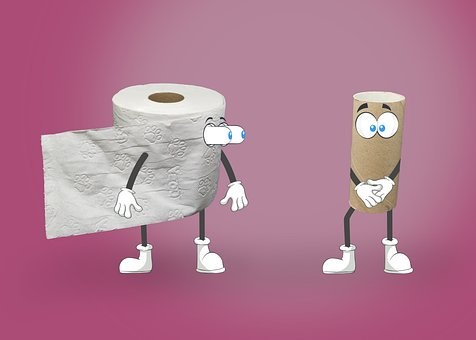
The current COVID-19 pandemic has led to a very strange phenomenon where toilet paper (affectionately known as ‘loo roll’ in the UK) seems to be the first thing that people are panic buying.

It almost boggles the mind as to how a respiratory illness from China can cause the stores in the US to sell out all their toilet paper in hours. Panic can make people illogical and selfish.

On an interesting note, there’s a website online that online that will calculate how long your existing supply of toilet paper will last. You can see it here: https://howmuchtoiletpaper.com/

The only possible explanation for all the hoarding is that people are afraid that the pandemic will be a protracted situation, and they’ll be left without any more toilet paper.

While this is hardly likely because there are no production hiccups and supply chains are still strong, you may encounter a situation where you can’t buy toilet paper because the store shelves are empty.

You may be running low or have completely run out, and now you’re really in a sticky situation.

So, what do you do?

  • Bidets

The most difficult hurdle to overcome will be to shift your mindset. It’s also the easiest way to deal with the toilet paper shortage.

Millions of people in Europe, Asia, etc. use bidets to clean up after defecation.

A spray of water is delivered directly to the anus and cleans the area pristinely. It’s more hygienic than toilet paper and its hassle-free.

You’ll not need any toilet paper when water is your friend.

Americans who are not used to this practice and can’t even fathom the idea of using a ‘bum gun’ to clean themselves will be hesitant to try it out.

Do give it a try and you may never look back. Tough times call for improvisation and adaptation.

Rather than spending hours in queues or jostling with other people just to get toilet paper, you could easily purchase a bidet from Amazon and install it in your house. Problem solved.

  • Wet wipes

This is another alternative to toilet paper. There are two problems here. Firstly, these may be sold out too. Secondly, flushing wet wipes down your toilet may clog the plumbing.

If your toilet gets clogged, you’ll need to find a plumber to fix the problem and during these times of self-isolation, that will be a bigger chore than usual.

Some people may hoard baby wipes as toilet paper substitute. This is not recommended because babies NEED those wipes too, since their skin is softer and more sensitive. Be thoughtful even when times are tough.

  • Fast food napkins

Sometimes you just have to think out of the box. Fast food outlets usually provide paper napkins with their meals. Buy a delivered junk food Meal and voila! You’re now the proud owner of a PizaToiletpaper.

  • Washable towels/cloth rags

This one is nasty and should only be undertaken by those with a strong constitution. All levity aside, the cloth towels/rags will be used just like toilet paper, but when you’re done using the towels, you’ll need to wash them in hot water so they can be reused later.

If the idea of doing this makes you balk, you’re better off just getting a bidet and calling it a day.

  • Paper products

There are many other types of paper that you could repurpose as toilet paper. You could use old newspapers or you could yank out the A4 paper from your printer and use those too. CVS receipts are another option.

The problem here is that you’ll need to soften the paper with water first. The last thing you want are paper cuts on your behind.

Then there’s also the issue of safety. You don’t know if the inks on the paper or the receipts will have any negative effect on your health, if absorbed by your skin.

You’ll also need to discard the used ‘toilet paper’ in the trash and not flush it down because your plumbing will get clogged.

  • Sanitary pads and/or sponges

Feminine hygiene products may be sold out, but if all you can get your hands on are sanitary pads, those can be used as toilet paper too.

Dishwashing sponges are another alternative. But just like the washable towels, you’ll need to reuse them which means washing them and enduring the ordeal.

Once again, none of these products should be flushed down your toilet because they do NOT break down like toilet paper, and will clog the sewer lines.

Besides the options mentioned above, hardcore survivalists will recommend toilet paper alternatives such as leaves, rocks, corn husks, etc.

These are extreme measures, and we’ve not reached a situation where you’re living off-grid or in the wilderness. The store shelves will be restocked and many supermarkets have instituted quotas on the essential items to prevent hoarding.

Your best bet during this time will be to use a bidet and get through the shortage until the situation returns to a relative state of normalcy. Rest assured that it will happen soon.

Developing a Strong Mind When Everyone Else is Losing Theirs

People are panicking. They’re stressed and hoarding and panic buying. Get on social media, and everyone and their plumber is going on and on about the COVID-19 pandemic.

While the coronavirus is a serious matter and is cause for concern, it’s still no excuse to get sucked into the current whirlwind of fake news, panic and stress that is sweeping the world.

  • The truth is that…

No one has any answers and the facts keep changing daily. You can’t trust the media because they’ll make any situation seem worse than it already is.

People are making things harder than it needs to be by clearing the store shelves and hoarding. You could try explaining to them that their actions are unnecessary because supply chains are still strong… and there are no shortages other than the ones people are creating through panic.

But most won’t listen and you’ll just get aggravated by the stupidity of your fellow man. So, how do you stay calm when so many are worried?

  1. Stop following the news and/or hysteria on social media

The best way to strengthen your mind is to stop feeding it garbage.

Governments lie. You really do NOT know if the situation in China has gotten better or if that’s just another lie from the Chinese government.

Most people are clueless. Just a few months ago, they were jumping out of their cars to do the Kiki dance challenge, and suddenly now they’re virologists speculating about why deaths are increasing in Italy.

Engaging in pointless dialectic with them is unnecessary. The situation is what it is and the healthcare professionals and authorities will do the needful to manage the problem.

You worrying unnecessarily is not going to help you. In fact, you’re doing a disservice to yourself because stress lowers your immune system and makes you more vulnerable to disease.

  1. Exercise daily

Nervous energy, fear, and other unhealthy emotions tend to ‘snowball’ within you. There MUST be an outlet for this negative energy and nothing beats physical exercise as a form of release.

When you work out, you help to expend all that pent up energy within you and your body also releases endorphins that will make you feel better. This is a win-win.

Ideally, you should engage in exercises that occupy both your mind and body. For example, following a home workout on video will help you focus on the training rather than drifting into your own thoughts.

If you were to run on a treadmill which is an exercise you can do on ‘autopilot’, you’ll end up thinking of other worrying scenarios rather than focusing on your training.

Your body needs movement and your mind needs a mental break. Engage in activities like kickboxing, bodyweight training, juggling, etc. to engage both your mind and body.

  • Stay busy

An idle mind is a devil’s workshop. As long as you’re in pursuit of a worthy goal and busy with what needs to be done to get there, you’ll not have time to worry about what’s the worst that could happen.

Any fears and worries you have about COVID-19 are all in your mind. You’re a prisoner to your imagination. Put your mind to work on something else and you’ll be less stressed.

  • Prayer

Over the past few years, religion has been mocked and it has almost become uncool to believe in God. Atheists and other groups make it seem like belief in God is pointless and not based on science.

The truth of the matter is that there is immense power in prayer. Praying and surrendering your worries to a higher power removes stress from your life because you’re now living by faith, not sight.

Come what may, you’re in the palm of His hand and there’s no point in worrying over what’s beyond your control.

  • Be safe

Take all the necessary health precautions to protect yourself and your family. You do not want to deal with the guilt of having a lackadaisical attitude which raises the risks of getting the disease.

  • Adapt. Improvise. Overcome.

Life goes on. Despite the food shortages due to hoarding, or the lockdown, or possible unemployment and recession… decide that you will be resilient and adapt to the situation.

The kite rises against the wind, not with it. You will rise and overcome this situation.

To conclude, just know that all you can do is your best… and that’s enough. If you’ve taken all the necessary precautions to minimize your risks, you’ve done enough.

Don’t give in to panic or fear. Neither is real. You have what it takes to overcome anything. Have faith in yourself.

“You can destroy your now by worrying about tomorrow.” – Janis Joplin

Do You Really Need to Make Your Own Hand Sanitizer?

There’s a common assumption that hand sanitizers will help you avoid the COVID-19 virus. This is a misconception. While these little bottles of alcohol-based solutions can help to kill some bacteria, they’re not your most potent weapon against the coronavirus.

Currently, people are hoarding bottles of hand sanitizers and some are even reselling them at higher prices. Even in stores, if you can find these products, they have been significantly marked up in price.

  • Vodka doesn’t work!

More and more people are thinking of creating their own hand sanitizers at home. There have been videos circulating around on social media where you can see clueless souls mixing vodka or bourbon with water to create a hand sanitizer spray that would make MacGyver proud.

In reality, vodka or other alcohols sold in stores just do not meet the mark when it comes to creating a potent hand sanitizer. You need at least 75% alcohol… and the ones sold in stores are usually only around 40 to 50%. They’re too weak to be of any use… besides getting you high.

Furthermore, using the wrong type of alcohol can cause burns or skin problems. You’re better off wearing disposable gloves rather than rubbing some questionable homemade concoctions on your hands.

  • A quick recipe

While making your own hand sanitizer is unnecessary, if you truly insist on making it, you might as well follow a recipe provided by the World Health Organization.

You can find the recipe to download here: https://www.who.int/gpsc/5may/Guide_to_Local_Production.pdf

Follow the instructions to the letter.

  • 4 Precautions That are Better than Hand Sanitizers

*Wash your hands often.

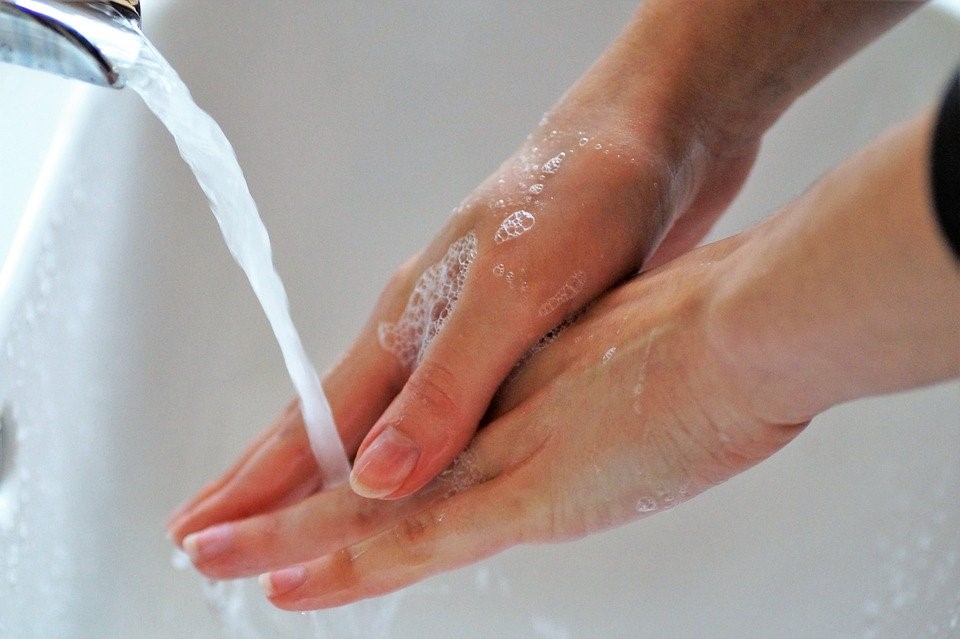
This is so simple and basic, yet has been overlooked by millions of people until now. Washing your hands with soap and water is far more effective than any hand sanitizer on the planet. It cleanses your hands and washes away most of the bacteria.

*Avoid touching your face

When you’re outside, you’ll come into contact with countless surfaces such as handrails, elevator buttons, door knobs, etc. All these places can have bacteria/viruses on them.

In many cases, you might have no choice but to touch these surfaces. The best thing you can do to mitigate the problem is to constantly remind yourself to keep your hands far away from your face, and to immediately wash your hands once you have access to soap and water.

*Disinfect your workstation

If you have no choice but to go to work, use a towel and disinfectant spray like Dettol or Lysol to wipe down your work area. Once again, do not sink into complacency and touch your face when at work.

*Practice basic hygiene at home

Avoid wearing shoes into your home. You don’t want to track bacteria from outside in.

Shower before you sit anywhere in your house. Place all clothes that you wore outside straight into the washing machine and wash them.

The goal here is to minimize contact between the items in your house and what you wore outside. You may choose to wipe down your handbag/briefcase with a cloth and some disinfectant spray.

If you can adopt these 4 precautions, you’ll be far less likely to get infected with COVID-19. Of course, besides these measures, social distancing is the BEST way to keep the disease at bay.

Be alert. Be proactive. Be safe.

Coping with Food Shortages During a Pandemic

The current food shortages in the UK are not due to a broken supply chain or production issues. The empty store shelves are a result of people panic buying more than they need and hoarding supplies.

Some folks are buying in bulk so that they can price gouge these products and sell them at a mark up to desperate people. Never encourage price gouging by buying from people hoping to make a quick buck. Things are not that desperate yet.

The empty shelves are just a temporary inconvenience. In fact, trucks are still transporting supplies and store shelves are being stocked even as you read this.

Quotas are being enforced to limit how many essential items every customer can buy. So, there’s no need to panic that you’ll die of starvation unless you kill and eat your neighbour.

In the meantime, here’s what you can do to ensure that you don’t end up with nutrient deficiencies…

  1. Get supplements

We need food for nutrients. It’s as basic as that. If there’s insufficient food, supplements will help to take up the slack. In fact, even with food, supplements are crucial because our foods are low in nutrients due to intensive farming on nutrient-depleted soils.

So, pick up a multivitamin, a greens supplement, some fish oil pills, garlic oil, magnesium, zinc, vitamin C, vitamin D, curcumin, coconut oil, etc.

Since many places are on lockdown and self-isolation is required, vitamin D is especially important if you don’t get enough sunlight.

Bodybuilding supplements like whey protein, egg protein, BCAAs, etc. are all useful. Most people do not look to these as a source of food… and yet, they can be used to replace meals too.

  1. Protein beats carbs

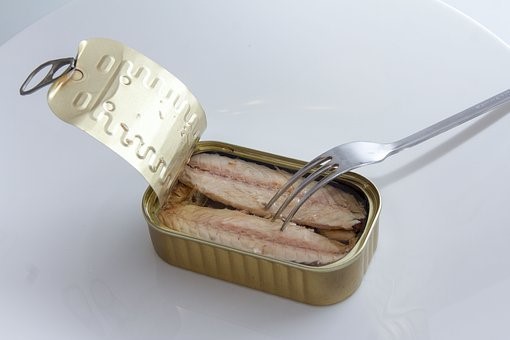
Your body can survive without carbs, but you need protein and fats. So, if there’s canned food like sardines, beans, etc. get those.

Your goal should be to buy foods that are high in protein. You can get your fats from coconut oil or olive oil. Carbs should be an afterthought. Buy foods based on nutrition and not taste.

Very often, people try to stock up on pasta, rice, bread, instant noodles, etc. These are unnecessary carbs that lead to obesity. We’re in a pandemic now. It’s time to wean yourself off your carbs and get lean.

The silver lining to this COVID-19 cloud is that you finally have all the necessary conditions to accelerate weight loss.

  1. Intermittent fasting

Here’s the truth – if the shelves are empty and it’s going to be a few days before the food arrives, you can’t eat like you’re accustomed to.

Aim for just one meal a day. Don’t worry. You won’t perish. In fact, your body will begin a process of self-cleansing and you’ll actually feel better.

Even if all you did was go on a water fast for 5 days, you’d be fine. You’ll experience increased mental clarity, more energy and a feeling of ‘lightness’. You’ll feel great. All hunger pangs usually disappear after the 3rd day.

  1. Ration your foods

Take stock of the food you have and make a weekly plan as to how you’ll ration it among your family members. Eating blindly without concern will put you in a situation where you may not have enough.

  1. Shop when you can

Even if it means waking up at 6 am to join a supermarket queue, do it. Family members can take turns daily to do some shopping unless they are at risk. While you shouldn’t be hoarding, you should at least have enough food to last you and your family for 3 days.

Just by buying a little extra each time, you’ll be able to meet your requirements. Most importantly, you must have a plan. Don’t end up having a pantry that only has chocolate cookies and canned fruit.

  1. Order your groceries online

There may be some hiccups and your orders may get cancelled or the inventory may have sold out. Nevertheless, be persistent. Things are getting better now and you should be able to get an order through sooner or later.

Shopping online is easier and you’ll have food stores to tide you over any shortages at the brick and mortar supermarkets.

The COVID-19 pandemic is NOT a World War 3. There’s no destruction of supply lines or amenities.

Everything is still functioning, just at a slower rate because of the lockdowns and other measures. Hoarding and panic buying will not help you or anyone else during this situation.

Keep a level mind and buy what you need and just a little bit extra to last for 3 days. That should more than suffice.

Eat one meal a day and look at this period as an opportunity to lose weight and achieve the body you’ve always wanted. Now is as good a time as any.

Safety Measures To Take When Self-Isolation is Not an Option

Many countries are already on a nationwide lockdown with only essential services in operation. Several have recommended self-isolation as a precautionary measure to halt the spread of COVID-19.

While one can’t deny the efficacy of self-isolation, in some cases, you may have no choice but to go out even if you don’t want to.

One good example would be health workers and first responders who still need to go to work to manage the crisis. In almost all cases, these are medical professionals who will know what to do to stay safe.

The problem arises when other people have to go to work because the companies, they’re employed at are not shutting down. This group of people generally are not aware of the risks and necessary precautions they should take.

At times like these, you will need to proactively reduce your risks. During a pandemic like COVID-19, it’s almost impossible to eliminate the risks. All you can do is reduce them. Let’s see how you can go about it.

  1. Avoid public transport, if you can help it.

If you have your own vehicle, use it. Now is not the time to be environmentally conscious. If you don’t have your own vehicle, either use a bicycle or walk, if the place you need to go to is not too far.

Alternatively, you may choose to carpool with a few people you trust. Everyone needs to be onboard when it comes to staying cautious.

Mathematically speaking, carpooling is safer than taking a ride on a public bus or subway where the risks increase exponentially just because of the sheer numbers of people on it.

  1. Wipe down your workstation

Use a disinfectant spray to wipe your workstation at the start of every workday. Use a mask if it makes you feel safe.

Avoid touching your face and wash your hands regularly. This is NOT paranoia. It’s a necessary measure. Office spaces are usually air-conditioned and not too big. It’s easy for the virus to spread if just one person has it.

  1. Keep to yourself

Avoid hanging out in groups with co-workers. You’re not being unfriendly. You’re just being cautious.

Self-isolate at work as best as you can. Avoid eating with others and it’s best to eat at your own desk. Ideally, you should have brought food from home because you want to avoid going out too much.

The goal is to avoid crowds and people whenever possible. COVID-19 has been proven to be contagious and the only way to arrest the spread is to minimize contact between people.

  1. Ask your boss to let you work from home

If you don’t ask, the answer is always no. Speak to your boss and see if it’s possible to work from home or come into the office twice or three times a week.

You can still get the job done while maintaining some form of isolation. It’s in everyone’s best interest to do so. While this is not possible for those in the service industry, regular office workers should have no problems here.

It’s usually the management that needs to shift its mindset.

  • Shop online

If you do not need to go to work, you may probably only need to go out to get groceries. If possible, purchase most of your groceries online.

Sometimes, you may see that items are sold out or the website may ‘hang’ or cancel your order. Do try again at intervals.

Often, the inventory is replenished your order will go through. It’s just a matter of being persistent.

Stores have implemented quotas so that customers can’t hoard. So, while you can purchase the items you need, you’ll need to keep going back for more. Shopping online will allow you to avoid breaking self-isolation and keep things relatively hassle free.

  • Monitor your health

Last but not least, monitor your health and strive to improve it.

Eat wisely. Exercise indoors daily. Boost your immune system with vitamin C, zinc and probiotics. Try to lose weight and eliminate unhealthy habits like smoking.

Now is the time to prioritize your health and orientate yourself towards a better lifestyle. This COVID-19 pandemic will pass, but the positive habits you form now will serve you well all your life.

9 Ways to Boost Your Immune System During a Pandemic

There has been a lot of conflicting news going around about COVID-19. However, the general understanding is that this respiratory illness tends to cause deaths in people with a weaker immune system or in those who have other existing illnesses.

So, it’s no wonder that millions of people have suddenly taken an interest in their health and wish to boost their body’s immune systems. The good news is that you can shore up your body’s defences in a relatively short time if you adopt the necessary measures.

Here are 9 that will give you an edge during this pandemic.

  1. Vitamin C

We all know that this is the most commonly recommended vitamin for fighting colds and preventing the flu. Unfortunately, the body does not have the ability to store vitamin C.

So, you’ll need to consume a vitamin C supplement daily. It could be a chewable or in effervescent form that dissolves in water.

During these dangerous times, you’re better off getting your daily dosage through a supplement, rather than trying to meet your daily needs by guzzling orange juice or gnawing on broccoli.

  1. Zinc

An often neglected mineral, zinc has a multitude of benefits. Your body cannot produce it. So, you’ll need to proactively consume it.

You can easily purchase zinc supplements from a health store online or offline. Only a small amount daily is required to help promote optimal health.

Zinc will help to boost your immune system, decrease inflammation, accelerate healing and reduce the risks of age-related disease. This is especially important now because older people are more susceptible to COVID-19.

  1. Probiotics

Probiotics will improve your gut health and as a result, your immunity will get stronger. It aids in the production of antibodies and also mitigates most respiratory illnesses. You definitely want to be consuming probiotics.

Yoghurt, miso, tempeh, kimchi and kombucha are excellent probiotics to include in your diet.

  1. Garlic oil supplements

Garlic is an immunity booster, and the allicin it contains has medicinal properties. This is one of nature’s most powerful foods and it works wonders at preventing diseases and improving general health.

You can get some from a health store and consume a capsule or two daily. While eating garlic is good, a supplement is easier and better because you’ll need to consume a lot of garlic to get the same amount of allicin that you get from a capsule.

You’re trying to ward off COVID-19, not Dracula. So, an easy to swallow capsule will do.

  1. Exercise

Self-isolation does not mean hibernation. Exercise will boost your immunity by getting your blood circulation going and improving your strength and stamina.

Even if you’re stuck at home, there are tons of home workouts that you can do to get your daily exercise. Go ahead and try home workout programs like P90X or Insanity Max. You’ll be amazed at how challenging these workouts are.

Do note that excessive exercise can lower your immunity. So, exercise daily but don’t overdo it. With the coronavirus going around, you do not want a weaker immune system.

Exercise to break a sweat and get your heart pumping, but don’t work yourself daily to a point of exhaustion and tax your central nervous system unnecessarily.

  1. Sleep

Get 7 to 8 hours of sleep daily. A well-rested body is a healthier and stronger body.

  1. Weight loss

Your health will improve when you shed your excess pounds. With all the food shortages in the supermarkets, now is as good a time as any to adopt an intermittent fasting protocol and lose weight.

Your immune system will get a boost and your health will improve tremendously as you make your way towards your ideal weight.

  1. Breaking addictions

Quit smoking. Reduce your consumption of alcohol. Cut down your sugar intake and strive to give up any unhealthy habits you may have.

It’ll be tough… but that’s to be expected. Embrace the challenge and overcome it. Once these detrimental habits are eliminated, you will look and feel like a brand new you.

  1. Personal hygiene

Basic hygiene such as washing your hands regularly, not touching your face when you’re outside and showering the moment you get home are all simple but crucial habits that will boost your immune system.

DO NOT sit on the couch or bed when you get home from outside. You don’t know what bacteria are on your clothes… and you don’t want them transferred on to the items in your house.

Put your clothes for washing immediately and wear new ones after your shower.

By adopting these 9 measures, you’ll boost your body’s immunity and give yourself a fighting chance against COVID-19 or any other disease that tries to take root in your body. Get started today.

Coronavirus Planning – FREE GCSE and A level podcasts

CORONAVIRUS PLANNING – FREE GCSE & A LEVEL PODCASTS FOR SCHOOLS

UK audio education service, Audiopi, is offering schools free access to their GCSE & A Level podcast tutorial service for 2 months to help mitigate the possible impact of Coronavirus.

Created by subject experts, and used by schools around the world, Audiopi’s podcasts cover a wide range of GCSE and A-Level subjects, providing a perfect distance learning solution. Produced to exam board specifications, the podcasts can be easily accessed at home or on the move via the Audiopi website or app.www.audiopi.co.uk

David Piggins, CEO and Founder of Audiopi said:
‘This is a crucial time for students in the UK with exams just around the corner. If schools do need to close it is very important that students have an effective way to continue with their studies and revision programmes. We are giving schools access to our podcast tutorial service for free to ensure that this can happen. Hopefully this will be unnecessary but, quite rightly, schools are putting in place their contingency plans now. If the worst does come to the worst, we suspect things will happen quickly.”

Any school wanting to access Audiopi’s service can secure instant access by contacting Audiopi here: https://www.audiopi.co.uk/contact or via email at info@audiopi.co.uk

Should parents find it necessary to provide direct and additional support to their children Audiopi also offers its service directly to students and parents on a monthly subscription basis.

Eczema Consultation & Treatments At Pharmacy2U

Atopic eczema (also known as atopic dermatitis) is the most common form of eczema and mainly affects children but can often continue into adulthood. One in five children in the UK has eczema, and 35% of cases continue past the age of 16 years.

Eczema is a long-term, or chronic, condition that causes the skin to become itchy, red, dry and cracked. In some cases, the problem area can become infected, making things worse. Scratching the affected area can damage the skin and increase the chance of infection, so this should be avoided (although resisting the need to scratch can understandably be very difficult).

The severity of the condition can vary from person to person. It can be mild, but severe cases of eczema can be very sore with badly cracked and bleeding skin. The most commonly affected parts of the body are behind the knees, inside the elbows, on the side of the neck and around the eyes and ears. For most people, their eczema will be okay for a while and then flare up to become much worse, requiring additional treatments.

What are the causes of eczema?

The exact causes of atopic eczema are not known, but it does occur more often in people who are prone to allergies, and also those who suffer from other problems such as asthma and hay fever. It has been established that eczema runs in families, so genetics has a part to play in whether or not you’ll be affected by the condition. If you have genes that predispose you to eczema, the condition may then be triggered by allergens in the environment such as dust, house dust mites or pollen. In many cases, some types of food can act as allergens that trigger eczema – milk, eggs, nuts and wheat are common culprits.

However, allergens are not the whole story, as eczema can also be triggered by other factors including cold weather, rough clothing, harsh soaps, washing too much, stress and sweating a lot. In general, it does seem that the prevalence of eczema is on the increase. This may be due to changes in the way we live or the environment we live in, but the relative importance of each factor is not clear.

How is eczema treated?

Eczema cannot be cured, but many people simply grow out of it. However, when you are suffering from eczema, it can be both physically and emotionally uncomfortable, so it’s good that there are effective treatments to help control the symptoms. The Pharmacy2U Online Doctor service can provide a wide range of prescription-strength treatments if appropriate. The treatments on offer are discussed below:

Emollients. These are moisturising treatments that soothe the skin to reduce dryness, cracking and itching. Emollients are frequently used to control the symptoms, and tend to come as creams, ointments, lotions or bath additives. The best form for you will depend on your skin and the severity of eczema symptoms, but in general, ointments are the best for very dry skin (although they’re the greasiest to use). Emollients are also useful as a substitute for soap, which can be very drying to the skin.

The Pharmacy2U Online Doctor service offers large packs of the following emollients:

Topical corticosteroids. These are steroid creams and ointments that are applied to the skin to help reduce the redness and inflammation during flare-ups. The steroids vary in strength. Small packs of mild steroids such as hydrocortisone and Eumovate can be bought without a prescription, but larger pack sizes, stronger steroids and steroids with other ingredients to tackle infections are only available on prescription.

Click here to find out more.